Double-click to edit...
Social Skate Summit 2026
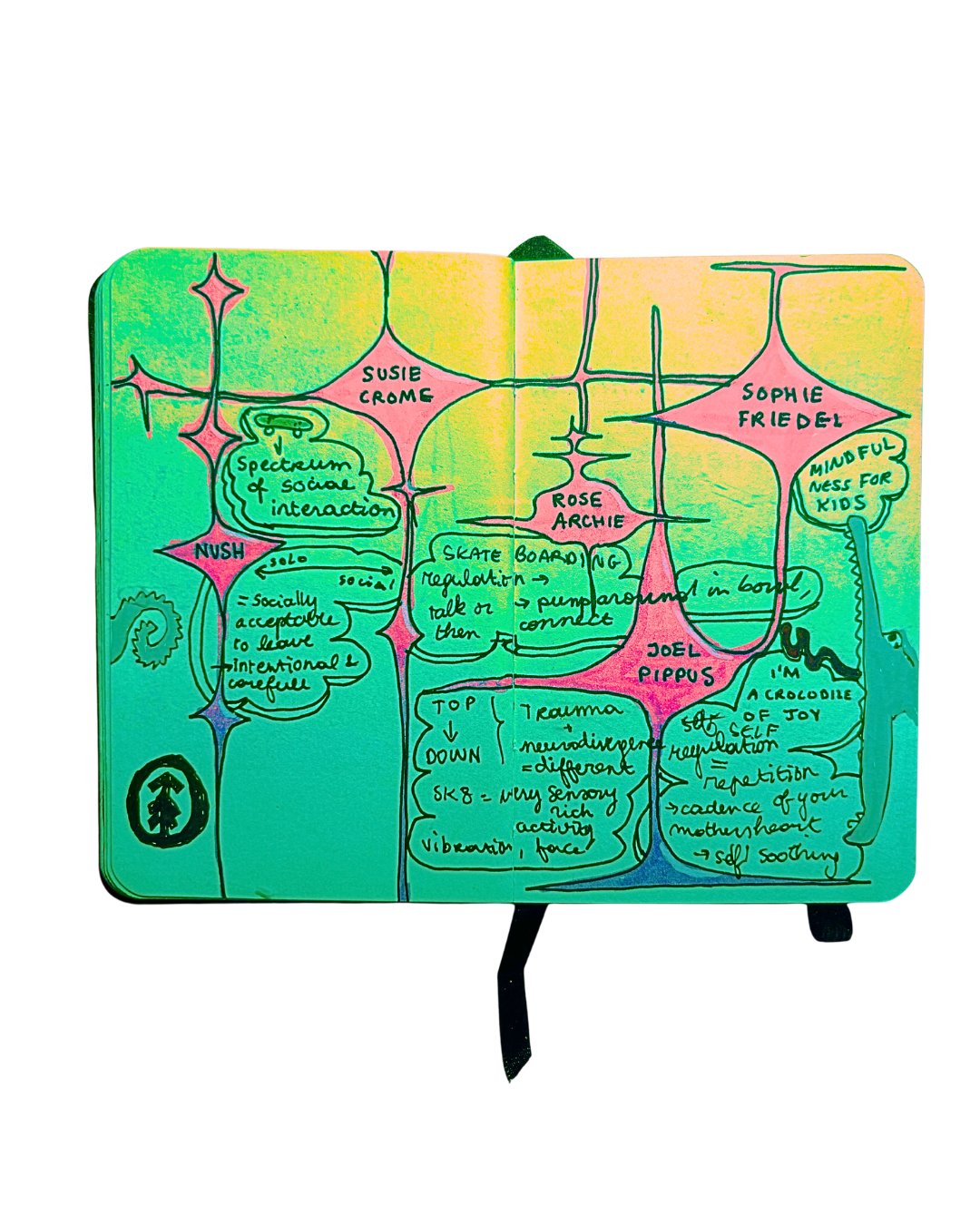
We are now a few days after the Social Skate Summit 2026. It’s the first time this amazing event took place.
Organised by @keeprolling_co, @thegoodpush @skateistan, @citymillskate, @iscp_and_skatz ,we had a 3 days program of very well organised talks and network opportunities around social skate projects.
Examples of the panel talks where “How to prove the positive impact skateboarding can have” or “the Physical and mental wellbeing in skateboarding and WCMX” amongst many other.
I have so many things to write down and I will make another blog / zine soon with more concrete and practical examples of what we have learned that weekend!
But in this post, I want to tackle the thing that touched me the most, the soul inspiration and heart touching aspect that I took home with me.
It’s about what is behind the façade of courage.
Enjoy the read and leave a comment if you feel doing so!
Being a Double rebel
The first thing that comes up to my mind when I rethink about this weekend was the aspect of courage, and what’s behind that facade.
Courage is something quite visible, and glorified already in the world. It’s the main topic in movies, books, and praised as a personality trait, especially in skateboarding itself, sometimes to the point of courage turning into recklessness, even.
We see pushing boundaries of tricks and our own capacities as something heroic, and inspiring for others.
At first glance, and often on social media, we see a project or a person doing what we do. And what we do is mostly, breaking the status quo, breaking the stereotype, changing a norm, and we do so through our skate proejcts.
People, including myself, immediately think of courage. That's normal, and it is absolutely necessary - it does take some fucking enormous amount of courage to start initiatives like this.
To be rebellious within something that is already considered rebellious, like skateboarding, is being a double rebel. You need to be brave to even think about doing it.
Already skateboarding is considered a courageous thing to do. To go stand on the coping and look down a bowl, and think, “I’m going to drop this,” takes a certain amount of courage that many consider above average.
To start doing it alone, as a gender minority in the scene, especially in a place where skateboarding is not vastly known to locals by going knocking on doors of houses to ask if the girls can come skate — like Houda did — that takes courage. (cjf_morocco Concrete Jungle Foundation)
To start a collective for trans skaters, while there is a current social climate that is incredibly hostile towards transgender persons, that takes courage. Griffin and the Trans Skater Collective is a admirable example of that.
To come up to a skatepark, as a person using a wheelchair, while so many facilities are not taking you in regard when being built — that takes courage. And then on top of that, grinding a rainbow rail like David from the collective Sit’N Skate, that takes some fcking courage (sorry for the swearing but it’s just super gnarly).
But it takes way more than courage
But behind the courage, behind this glorious facade of bravery and heroic triumph, there is a lot of invisible yet heavy work. So much hard work, patience, consistency, self-education, communication, time, organisation, reaching out, applying, writing, spreading the word, connecting.
Because if you have just the courage, which is already super cool, you might go on top of the bowl cooping - and be like, I’m going to drop in this bowl.
And that’s amazing, don’t get me wrong.
You might have it already after the first try, if you’re lucky.
You might also fall and never get back up there again.
But the fact that you go back up, reface that adrenaline rush, come back tomorrow, and next week, and do it again, and again, and again — that’s the hard work.
The thing we forget, is that to be able to come back up there, if no one there looks like you, nobody tells you it’s possible that YOU can do it, it’s require double or triple the amount of courage.
The human is patterned in certain ways - we copy what we see, we allow ourself to believe things when we have been able to visualise them firts.
If you NEVER see yourself on the cover of a magazine, if you constantly are made to be felt insecure, if your whole childhood you were told “it’s not for you”, can you imagine the amount of courage to go back up there? It’s possible, and many of us have been there. But it doesn’t been have to gate keep it something as wonderful as skateboarding.
With our projects we make sure to also be there. To also be visible. For some it looks so pretentious, to just start a proejct and send it out to the world, and the magazines, “your barely skate and you are doing this?” Fuck yes I am.
And that visibility, presence, that requires patience and consistency and hard work.
And that’s what I find we overlook when we see the projects we lead while scrolling online - and what I learned the most out of this weekend.
The hard work that everyone puts in there is admirable, and it’s the thing next to courage that we should not overlook.
A labour of love and a love for the labour
We talked about free labour, the labour of love, the passion job.
We all had the same question during the panel “How turn your skate project into something sustainable” : how do we make this something sustainable for all us? Many were talking about burnouts, lack of funding, ways of making it work. And we soon realised there was no real or ready answer.
Some of us have do it as a career.
And many of us are doing hours on the side of our main jobs. It depends on many factors, such as the local politics, the opportunity for fundings, and who is deciding on who will receive the funding.
It takes repetition, time, and consistency to make people feel welcome, comfortable, and safe to undertake the rebellious act of skateboarding.
And making a space that allows this, means You HAVE to show up.
For some it’s possible to take a break.
But for others, if you don't show up — the people that need you will be there, waiting in front of closed doors.
So I want to send my deepest appreciation and humble regards to those
that show up again and again and again, especially in places where it can isolating to be the one taking the lead. I am myself very greatefull of the circumstances, even if sometimes the invisble labour lad takes too much space.
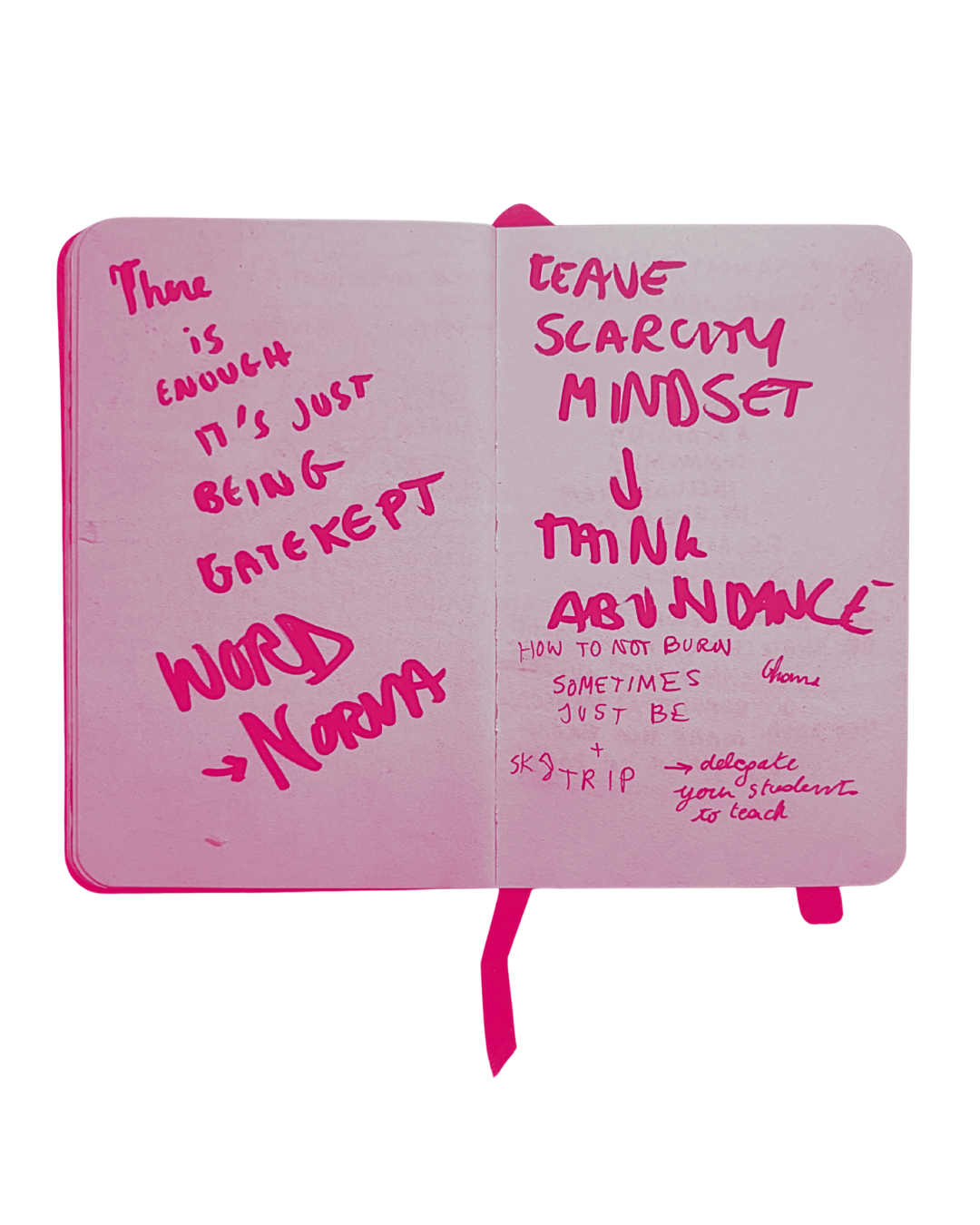
Also, I’m not just talking about physical hard work that you have to put by showing up.
But also the hard work it requires emotionally.
Because even if you show up, you hosted your session, you might go home still with your heart broken.
You were teaching skateboarding to a class of young girls and mums today - but at the same time you were trying to find out how to make this world gentler.
You are giving a hand to drop in, but at the same time you have to think about how to explain why we do girls-only sessions to an angry parent at the door, that thinks what you are doing is “segregation”.
Explaining 10 times to the same group of teenage skater boys showing up at your sessions, complaining about how they should have a boys only session too.
You go home and you research gender inequality and its actual numbers. Hopefully next time you have an answer ready to give them and then they will understand?
Or the discussion with that one parent who lied about their son being non-binary as a joke just so they could skate during your session - they say in a mean and jokingly manner “you can’t check it anyways”.
You go to sleep and think about this situation you witnessed in the park that was fucked up.
You try to understand both sides but also you don’t.
The slurs that were thrown out last time, they can’t be understood.
And who to talk to about this from the organisation?
Who to trust from the boys of the park?
They are so understanding and supportive but still you hesitate on how much you can share.
Then you go home to relax and watch some videos of people skating that look like you, and you read the hate comments.
And you burn with anger to make a change.
Putting on Different Shades
And this emotional and mental labour, we saw it in full action the most on Monday, when a person made a comment that was completely out of place in any situation, but especially in this situation. Let’s say we had to borrow our glasses to someone to put on to see through our point of view, and it took some time to do so.
Personally, when the subject popped up, my body started to shake. I had a very visceral reaction. I think it’s also due to the overstimulation from all the information of the weekend, my social battery being being drained, and the fact that I might be in the autumn phase of my cycle (something I learned from Muna to take more care of).
But I didn’t want to ignore it. I felt anger rise in me, and I felt the need to leave the space. I know it’s something that this summit encourages — to listen to your body, to take care of yourself.
But doing so, I felt very guilty. It felt like I was leaving my people to the battle, and I opted out.
Why am I running away from this confrontation?
Why is this stirring me up so much? Why do I feel it’s OK to leave others take the responsability?
I had these confrontations so many times before, and I could perfectly handle them.
Matter of fact, in daily life, I would be the first one to tackle the discussion and feel a responsibility to provide safety for the people I come up for, and organise these sessions that way.
This situation is hard for everyone in that space, so why do I get to leave?
We’re gonna be OK
I went downstairs, and then someone showed me the room next to the panels. They told me it’s ok to hang out there and take care of myself!
I laid down there with my body full of emotions. Contorted myself into all shapes and tried my own version of somatic care - I never know exactly what I’m doing but it feels good. I jumped, did handstands, clapped in my hands and looked at the river trhough the window. When my heartbeat slowed down, I started to feel OK about my decision.
I came back to reality of the situation and asked myself:
Would I felt OK leaving the room and doing some weird body contortion / self-regulating techniques so openly if this was not the Social Skate Summit? NO.
Would I have left my peers behind alone with a painful situation if it was not at the Social Skate Summit? NO.
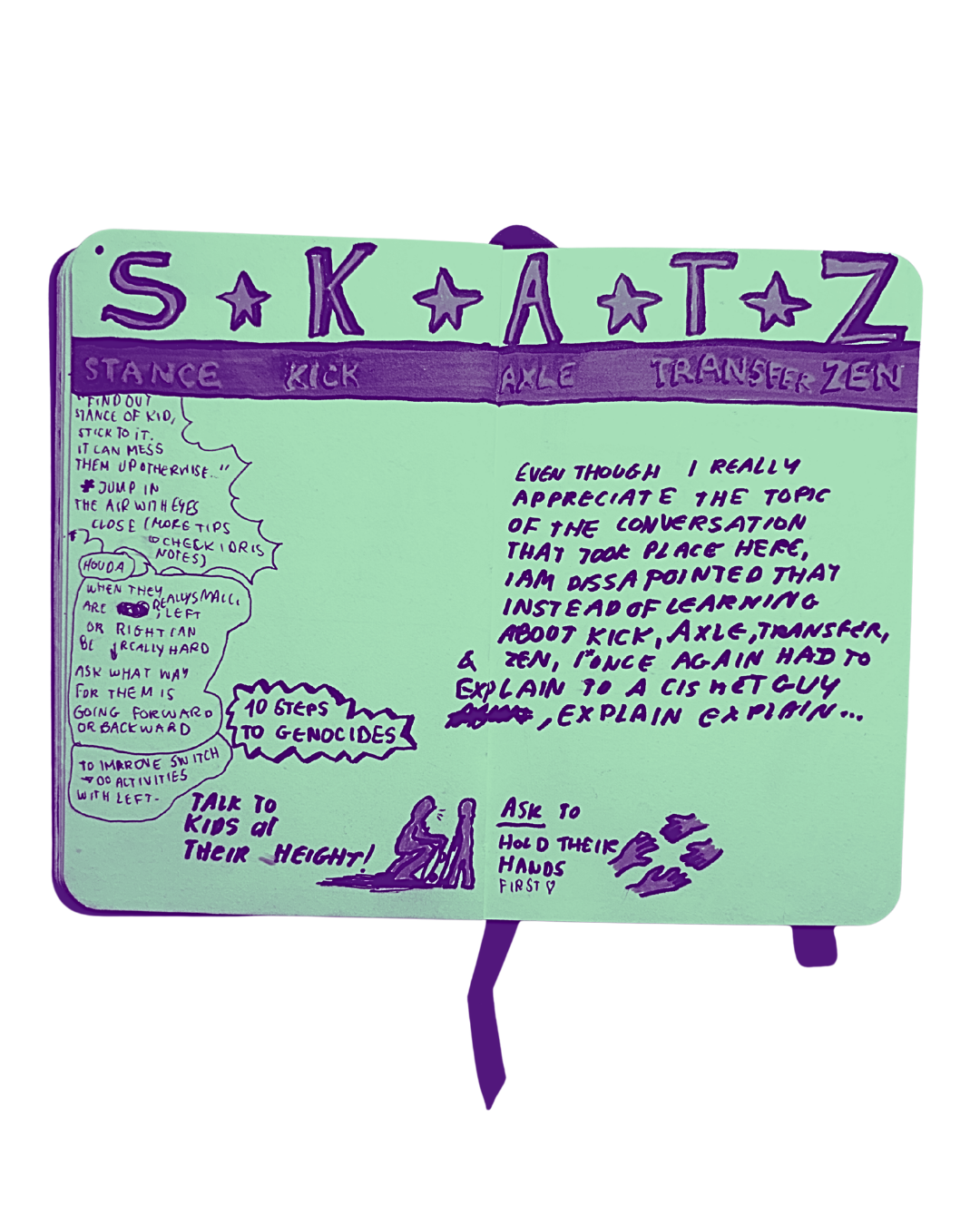
And I realised the reason why I left the room is because I actually felt SAFE and taken care well enough to be able to do so.
I felt that if I leave, we are here with such a big group of smart, emotionally intelligent, well-spoken, informed people, that I can take a break this time, I can leave this responsibility of defending my space and existence this time. It’s not me that is in charge.
Now typing this makes me emotional, because I sometimes forget how often I had to defend the space we host sessions, how often I had to justify them to others, how much invisible labour it takes, how much emotional energy I have put into it in the last 5 years. Even if the boys from the park support & help with what we do so much unconditionally - on the day itself it’s still you that is making sure the space is safe.
Tired of educating others — I wanted to educate myself!
My anger came out so abruptly during the conversation, because I came here to learn that day. I wanted to leave the workshop with coaching tips in my pocket so I could apply them to my students and in my spaces. But instead, again, another hour of my life where I have to explain to someone that the sole reason we do this is to be able to do the same thing he can do without lifting a finger.
I felt angry that my time was taken away and spent on this guy. Once again.
But then when I re-entered, I saw Griffin coming back in too. The energy in the room was dense. And then Griffin came up, facing the situation frontally.
The words came out of his mouth in a way that made it clear he had to repeat himself over and over again. What he does — why he does it. The words flowed. And that is courage — AND HARD WORK. To be able to talk, face the situation, and look it in the eyes.
I felt proud, I felt protected, I felt angry, all at the same time. And mostly I felt safe to be who I was and who I am there, amongst everyone. And now that our friend got educated on the topic, I also felt safe with him in our space.
This was a not-so-gentle reminder that our work is not over. That what we do is still so, so fucking important. That reality outside of our bubble can still be hostile. But we put on someone else’s glasses, and that person put on ours for that moment. And I guess this is part of the hard work we all put into this.